


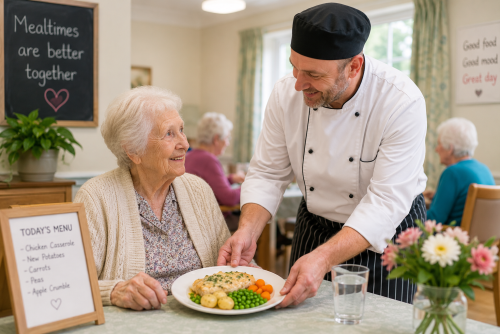
Mealtimes are an important part of everyday life in a care home. They provide nutrition and hydration, but they can also offer familiarity, enjoyment, independence, social interaction and a sense of routine.
For a person living with dementia, however, eating and drinking can sometimes become more difficult.
A resident may struggle to recognise food, forget that a meal has been served, find cutlery difficult to use, become distracted during meals or experience changes in appetite and food preferences. Some people may also develop chewing or swallowing difficulties.
The NHS notes that people living with dementia may not recognise foods, may refuse food, experience changing preferences or develop swallowing problems. Dementia can also affect drinking because a person may not recognise that they are thirsty.
This means the care home catering team has an important role that extends well beyond preparing food.
By working closely with carers, nurses and managers, chefs can help create meals and dining experiences that support residents’ individual needs, preferences, dignity and quality of life.
Key Takeaways
✔ Dementia can affect appetite, food recognition, coordination, communication and the ability to eat independently.
✔ Familiar foods and personal preferences can help make meals more meaningful.
✔ Calm, uncluttered dining environments may help reduce distraction and confusion.
✔ Smaller portions and finger foods can sometimes help residents maintain independence.
✔ Food presentation and visual contrast can make meals easier to recognise for some people.
✔ Hydration deserves as much attention as food.
✔ Dysphagia should be assessed appropriately rather than assuming every person with dementia needs texture-modified food.
✔ Good communication between catering and care teams is essential.
Why Dementia Can Affect Eating and Drinking
Dementia affects people differently, and there should never be a one-size-fits-all approach to catering.
Depending on the individual, dementia may affect:
- Memory
- Concentration
- Coordination
- Communication
- Recognition of food
- Appetite
- Taste preferences
- Ability to use cutlery
- Awareness of hunger or thirst
- Chewing and swallowing
Some residents may forget they have not eaten. Others may forget they have already eaten.
Someone who previously enjoyed a particular dish may suddenly refuse it, while another resident may develop a preference for stronger or sweeter flavours.
Alzheimer’s Society advises that changes in thinking and memory can make it difficult for someone to recognise food or understand how to begin eating.
For the catering team, flexibility and good communication become extremely important.
Start With the Person, Not the Diagnosis
A diagnosis of dementia does not tell a chef what somebody enjoys eating.
The individual still has their own:
- Favourite foods
- Dislikes
- Family traditions
- Cultural background
- Religious requirements
- Mealtime routines
- Preferred drinks
- Portion preferences
- Memories associated with food
This is where person-centred catering becomes particularly important.
A resident who has eaten a cooked breakfast every morning for 60 years may find that meal reassuring and familiar. Someone else may strongly associate Sunday lunch with family life.
Food can carry memories and emotional meaning.
Alzheimer’s Society recommends considering the person’s likes, dislikes, past routines, culture, religion and dietary beliefs when supporting eating and drinking.
Care-home menus should therefore provide meaningful choice rather than expecting every resident to fit the same pattern.
Create a Calm and Familiar Mealtime Environment
The catering team does not control every aspect of the dining room, but chefs and care staff can work together to improve the overall mealtime experience.
Too much noise, movement or visual clutter can make it harder for some people living with dementia to concentrate.
Helpful approaches may include:
- Reducing unnecessary background noise
- Keeping tables relatively uncluttered
- Allowing sufficient time to eat
- Creating a relaxed atmosphere
- Ensuring food is clearly visible
- Maintaining familiar routines where possible
Alzheimer’s Society recommends a calm, relaxing environment and reducing distracting background noise and clutter.
The aim should not be to create a clinical dining room.
It should feel like somewhere people can enjoy eating.
Food Presentation Can Make a Difference
Presentation matters in every catering environment, but it can have additional importance in dementia care.
A resident may find it difficult to distinguish food from the plate or the plate from the table.
Consider Visual Contrast
Some NHS dementia guidance suggests that contrasting colours can help make food and tableware easier to distinguish—for example, contrasting a plain plate with the table or placemat.
This does not mean every person with dementia requires brightly coloured crockery.
Individual needs should guide the approach.
The broader principle is useful: make the food easy to see and recognise.
Avoid unnecessarily cluttered presentation and consider whether the individual components of the meal are visually clear.
Avoid Overwhelming the Plate
Large portions can sometimes appear intimidating, particularly for somebody experiencing a reduced appetite.
A smaller, attractive portion may be more approachable, with additional food available if wanted.
Alzheimer’s Society recommends avoiding overloaded plates and notes that smaller, regular portions can work well for some people with dementia.
This should not be confused with simply reducing residents’ food intake.
Where a resident has identified nutritional needs or is at risk of malnutrition, those needs must remain central to their care.
CQC requires providers to assess and meet people’s nutritional and hydration requirements and keep those needs under review.
Finger Foods Can Help Maintain Independence
Using a knife and fork can become difficult for some people living with dementia.
Finger foods can sometimes provide an alternative that allows the resident to continue eating independently.
Depending on dietary requirements, examples might include:
- Small sandwiches
- Soft fruit pieces
- Vegetable pieces of an appropriate texture
- Potato wedges
- Small savoury items
- Bite-sized cakes or desserts
- Suitable snacks
NHS clinical guidance includes finger foods among strategies that can help when somebody has difficulty using cutlery.
The important principle is supporting independence wherever safely possible.
A meal does not become less dignified simply because someone chooses to eat it with their hands.
Familiar Food Can Be Powerful
Care-home chefs often have considerable freedom to make menus interesting, but innovation should not come at the expense of familiarity.
For many residents, traditional dishes may be comforting and recognisable.
Depending on the individual, that might include:
- Cottage pie
- Fish and chips
- Roast dinners
- Stews and casseroles
- Soup and sandwiches
- Rice pudding
- Apple crumble
- Familiar regional dishes
The resident’s own history matters far more than a generic list of “food for older people”.
Someone raised in another country or cultural tradition may have completely different familiar foods.
That is why getting to know residents is such an important part of excellent care-home catering.
H2: Food Preferences May Change
Chefs should also be prepared for tastes to change.
A resident who has always preferred savoury food may begin enjoying sweeter flavours. Another may reject foods they previously loved.
The NHS advises carers to be prepared for changing tastes and to offer foods the person enjoys.
Rather than automatically labelling someone as a “poor eater”, it can be worth exploring whether their preferences have changed.
Care staff can provide invaluable feedback to the kitchen about what residents are actually eating.
Hydration Is Just as Important as Food
Hydration can be particularly challenging for some people living with dementia.
They may:
- Forget to drink
- Not recognise thirst
- Struggle to communicate that they want a drink
- Forget where their drink is
- Have difficulty handling cups or glasses
The NHS warns that inadequate fluid intake can contribute to problems including constipation, headaches and urinary tract infections, which may in turn increase confusion.
Catering and care teams can work together to provide appropriate drinks regularly and identify what residents actually enjoy.
High-moisture foods may also contribute to fluid intake where suitable, but individual dietary and clinical requirements should always be followed.
Dementia Does Not Automatically Mean Dysphagia
This distinction is very important.
Some people living with dementia develop difficulties with chewing or swallowing, particularly as dementia progresses. But a dementia diagnosis alone does not mean somebody should automatically receive a texture-modified diet.
If swallowing difficulties are suspected, the resident should receive appropriate assessment and professional advice.
A Speech and Language Therapist (SLT) may assess swallowing and recommend suitable food and drink consistencies or strategies.
Where texture modification has been prescribed or recommended, catering teams need clear information about the resident’s requirements.
This is where knowledge of the International Dysphagia Diet Standardisation Initiative (IDDSI) Framework becomes particularly relevant.
Texture-Modified Meals Should Still Look Like Meals
Where a resident requires texture-modified food, safety is paramount—but presentation and enjoyment still matter.
A puréed meal should not automatically become an anonymous collection of food on a plate.
Experienced chefs can consider:
- Separating individual meal components
- Maintaining appropriate colours
- Creating recognisable presentation
- Using suitable moulding or piping techniques where appropriate
- Maintaining flavour
- Following the required IDDSI texture
- Ensuring nutritional requirements are met
The objective is to combine safety with dignity and enjoyment.
Communication Between Care Staff and Chefs Is Essential
The chef may notice that Mrs Smith has stopped eating a dish she previously enjoyed.
A carer may notice that Mr Jones is eating breakfast well but struggling at dinner.
A nurse may be aware that a resident’s swallowing needs have changed.
Individually, these are pieces of information.
Together, they can help create a much clearer picture.
Strong communication should allow relevant information to move between:
Resident → Care Team → Kitchen → Catering Response → Ongoing Review
This can help the kitchen respond appropriately to changing preferences, appetite, dietary requirements and assessed needs.
Monitor What Residents Actually Eat
Menus tell you what the kitchen serves.
Plate waste tells you what people eat.
If a resident repeatedly leaves most of a particular meal, that deserves attention.
Possible reasons could include:
- Portion size
- Taste
- Temperature
- Presentation
- Difficulty recognising the food
- Difficulty using cutlery
- Dental discomfort
- Reduced appetite
- Swallowing problems
- Simply disliking the meal
Not all of these are catering problems, but catering teams can help identify patterns and communicate them to the wider care team.
This also connects naturally with our guide to reducing food waste in care homes—because monitoring waste can improve both kitchen efficiency and the resident experience.
Experienced Care Home Chefs Make a Difference
Excellent dementia-friendly catering requires more than following a menu.
Care-home chefs may need to understand:
- Nutrition and hydration
- Individual dietary requirements
- Food allergies
- Fortified meals
- Texture modification
- IDDSI
- Resident preferences
- Food presentation
- Food safety
- Communication with care teams
That is one reason specialist care-sector experience is so valuable when recruiting chefs.
At ASL Catering Agency Ltd, we specialise in supplying experienced catering professionals to care homes, nursing homes and residential care settings.
For care providers requiring catering support:
ASL Catering Agency – Care Home Chef Recruitment
Request a Chef – ASL Catering Agency
Relevant Training for Care Home Teams
Professional training can help chefs and care staff better understand the needs of residents living with dementia.
For this article, I would keep the FlexiLearnHub links tightly focused on the subject:
FlexiLearnHub – Online Care and Catering Training
I would link specifically from this section to your Dementia Awareness, Nutrition & Hydration, and Dysphagia & IDDSI Awareness courses. If you paste me the exact live URLs for those three course pages, I can give you the final anchor links without risking sending visitors to an outdated course URL.
Dementia-Friendly Mealtime Checklist
Care-home managers and catering teams can use these questions when reviewing their approach:
Resident Choice & Preferences
☐ Does the kitchen know residents’ likes and dislikes?
☐ Are cultural and religious preferences understood?
☐ Are changing food preferences communicated?
☐ Are familiar foods incorporated into menus?
Environment & Presentation
☐ Is the dining environment calm and welcoming?
☐ Is unnecessary clutter reduced?
☐ Is food easy to recognise?
☐ Could better colour contrast help individual residents?
☐ Are portions appropriate and visually appealing?
Independence
☐ Are residents supported to eat independently where possible?
☐ Could suitable finger foods help?
☐ Is enough time allowed for meals?
Nutrition & Hydration
☐ Are residents at nutritional risk identified and appropriately supported?
☐ Are drinks offered regularly?
☐ Are significant changes in appetite communicated?
☐ Is repeated plate waste investigated?
Specialist Requirements
☐ Are swallowing difficulties appropriately assessed?
☐ Does the kitchen have clear information about prescribed texture requirements?
☐ Do relevant staff understand IDDSI?
☐ Are texture-modified meals presented attractively as well as safely?
Teamwork
☐ Do care and catering staff communicate effectively?
☐ Are changes in resident needs passed to the kitchen promptly?
☐ Are temporary and relief chefs given an appropriate dietary handover?
Frequently Asked Questions
What makes a mealtime dementia-friendly?
There is no single formula. A dementia-friendly approach is person-centred and may include familiar foods, a calm environment, suitable portions, clear presentation, sufficient time, support for independence and good communication between care and catering teams.
Are finger foods suitable for people with dementia?
They can be useful for some people who have difficulty using cutlery or remaining seated for a conventional meal, provided the foods are appropriate for that person’s dietary and swallowing needs.
Should people with dementia receive smaller portions?
Not automatically. Some people with reduced appetite may find smaller, more frequent portions easier, but nutritional requirements are individual and must be met.
Does everyone with dementia need an IDDSI diet?
No. Dementia does not automatically mean a person requires texture-modified food. Where swallowing difficulties exist, appropriate professional assessment should guide the person’s food and drink requirements.
Why might someone with dementia suddenly stop eating?
There can be many possible causes, including changing preferences, difficulty recognising food, reduced appetite, dental problems, illness, medication effects or swallowing difficulties. Significant or unexplained changes should be raised with the appropriate healthcare professional rather than simply assumed to be caused by dementia.
Further Reading – Trusted Resources
These are the external links I recommend adding and setting to Open in New Tab:
Care Quality Commission – Regulation 14: Meeting Nutritional and Hydration Needs
NHS – Looking After Someone With Dementia: Eating and Drinking
Alzheimer’s Society – Supporting Someone With Dementia to Eat and Drink
These provide excellent authoritative supporting information for managers and care teams.
Making Every Mealtime Matter
Good dementia-friendly catering is not about creating a completely separate menu for everyone living with dementia.
It is about recognising the individual behind the diagnosis.
Their favourite meal still matters. Their culture matters. Their independence matters. Their dignity matters. And enjoying food still matters.
An experienced care-home chef can contribute enormously by working alongside care teams, listening to resident feedback, adapting presentation and portions where appropriate, understanding specialist dietary requirements and ensuring meals remain safe, nutritious and enjoyable.
When catering and care teams work together, mealtimes can become much more than a nutritional requirement.
They can remain a familiar, enjoyable and meaningful part of everyday life.
For experienced care-home catering support:
Request a Chef from ASL Catering Agency
And for chefs interested in joining ASL:
Visit FlexiLearnHub’s CPD & CQC Aligned certificated OnLine training courses
Our growing course library includes:
- Food Safety & Hygiene
- HACCP Level 2
- Allergen Awareness
- Nutrition & Hydration
- Dysphagia & IDDSI Awareness
- Advanced IDDSI Level 4 Professional Purée Presentation
- Infection Prevention & Control
- Dementia Awareness
- Mental Capacity Act & DoLS Awareness (CQC-Aligned)
- End of Life Care Awareness (CQC-Aligned)
- Modern Slavery Awareness (CQC-Aligned)
- Health & Safety Awareness in Care Settings (CQC-Aligned)
- Moving and Handling of People in Care
Thank you for visiting FlexiLearnHub


